
How to Book a Private Crab Island Captain: Step-by-Step
Table of Contents
What You Need to Know Before Booking a Private Crab Island Captain
Understanding Private vs Non-Private Boat Charters
US Coast Guard Certified Boat Charters: Safety and Credentials
Step-by-Step Booking Checklist for Your Private Charter
Step 1: Determine Your Group Size and Vessel Requirements
Step 2: Choose Your Charter Date and Duration
Step 3: Select Your Itinerary and Activities
Step 4: Review Amenities and Special Requests
Step 5: Confirm Captain Credentials and Insurance
Crab Island Charter Pricing: What to Expect and Hidden Costs
How a private charter quote is typically built
The hidden costs that cause sticker shock
Questions that force a quote to be transparent
How to budget for the day
Weather Policies and Cancellation Protection
Who decides whether the trip is cancelled
What 'weather cancellation' actually means for your money
How to protect your trip and your money
Questions to ask before you book
Preparing for Your Charter: What to Bring and Safety Requirements
Common Booking Mistakes to Avoid
Frequently Asked Questions
Last Updated: October 23, 2026
What You Need to Know Before Booking a Private Crab Island Captain
Booking a private Crab Island captain requires more planning than many first-time guests expect, there's a real difference between a crowded tour boat and an exclusive private vessel with a licensed captain.
A private charter means exclusive use of the boat, no strangers, no waiting on other passengers, no compromises on timing or itinerary.
Bad weather can cancel your trip, an unlicensed captain puts your safety at risk, and unclear pricing means surprise bills.
Understanding Private vs Non-Private Boat Charters
The difference comes down to exclusivity and control.
With a private boat charter, your group books the entire vessel and the captain customizes the route to your preferences, when to leave, where to go, how long to stay.
Key differences:
Private charters: exclusive vessel, custom itinerary, flexible timing, higher cost
Non-private charters: shared vessel, fixed schedule, crowded anchorages, lower cost
For milestone celebrations, romantic occasions, or groups who want control, private is worth it. For budget-conscious travelers happy with a standard tour, non-private works fine.
US Coast Guard Certified Boat Charters: Safety and Credentials
Every licensed captain operating in U.S. waters must hold a valid Coast Guard license. This isn't optional. It's federal law. A captain without proper certification is breaking the law and putting your group at serious risk.
What to verify before booking:
Captain holds valid U.S. Coast Guard license (ask for license number)
License matches vessel size and operating waters
Vessel has current marine insurance documentation
Don't assume a captain is certified just because they've operated for years. Ask directly and request proof, a reputable operator will provide it without hesitation.
Step-by-Step Booking Checklist for Your Private Charter
Booking a private Crab Island captain follows a logical sequence. Follow this checklist so nothing falls through the cracks.

Step 1: Determine Your Group Size and Vessel Requirements
Count your exact passenger total, including children, group size determines which vessel you need.
Larger groups need bigger boats: a 6-person group fits on a smaller pontoon, while a 20-person bachelorette party needs a larger vessel. Size affects pricing, comfort, and activities.
Questions to answer:
How many people total (including children)?
Do you have elderly passengers or mobility concerns?
What's your budget range?
Step 2: Choose Your Charter Date and Duration
Pick your preferred date and duration. Most private charters run 4, 6, or 8 hours, shorter for sunset cruises or quick Crab Island visits, longer for flexibility and multiple stops.
Check availability immediately, peak season (summer and weekends) books fast. Flexible dates give you better options; a specific date means booking early.
Duration options:
4-hour charter: sunset cruise, quick Crab Island trip
6-hour charter: Crab Island plus one additional stop
8-hour charter: full day with multiple destinations
Step 3: Select Your Itinerary and Activities
This is where your private charter becomes truly custom. Crab Island is the anchor point, but you can add stops based on your interests.
Common additions include snorkeling at nearby reefs, fishing in designated areas, or exploring other sandbars. Talk to your captain about what's realistic for your duration and group, since weather and water conditions affect what's possible.
Popular itinerary combinations:
Crab Island only (4-hour charter)
Crab Island plus scenic cruise (6-hour charter)
Crab Island, snorkeling, and sunset (8-hour charter)
Step 4: Review Amenities and Special Requests
Confirm what's included on your vessel, shade canopies, onboard restrooms, coolers, upfront so there are no surprises.
If you're celebrating an anniversary, birthday, or proposal, mention it, the crew can add small touches. Request dietary or accessibility needs now, not the day before.
Amenities to confirm:
Shade or canopy coverage
Onboard restroom availability
Cooler with ice provided
Step 5: Confirm Captain Credentials and Insurance
Before finalizing, verify captain credentials once more: ask for the U.S. Coast Guard license number and proof of marine insurance. A legitimate operator has no reason to withhold this.
This protects you legally and physically, if something goes wrong, you want to know the captain was licensed and the boat insured.
Documents to request:
Captain's Coast Guard license (active and valid)
Vessel marine insurance certificate
Safety equipment inspection records
Crab Island Charter Pricing: What to Expect and Hidden Costs
Private charter pricing is a structure, not a single number. Two operators can quote the same four-hour trip and the final bills can differ by hundreds of dollars because of how fuel, gratuity, and add-ons are handled. This section teaches you how to read a quote, not publish a rate card, since rates shift by season, vessel, and day of week.
How a private charter quote is typically built
Most operators price a private charter as a base vessel rate plus a captain fee, then layer on variable costs. Ask for your quote broken into these buckets so you can compare fairly:
Base vessel rate, the boat itself for the reserved block of time (often quoted per hour or per half-day).
Captain fee, sometimes bundled into the base rate, sometimes a separate line item. A licensed captain is not optional, so this should never appear as a surprise.
Fuel, either included in the base rate or billed as a surcharge based on run time and distance. Ask which model applies.
A lump-sum quote isn't necessarily bad, but it's one you cannot compare. Ask for the breakdown in writing before you pay a deposit.
The hidden costs that cause sticker shock
These are the line items first-time bookers most often miss. None are unusual, the problem is when they aren't disclosed upfront.
Captain and crew gratuity. A common convention in the private charter industry is 15-20% of the charter rate, paid directly to the captain and crew at the end of the trip. On a multi-hour private charter this is a meaningful amount, so budget for it when you compare quotes. Ask the operator whether gratuity can be added to the card on file or whether cash is preferred.
Fuel surcharges. Some operators include fuel in the base rate; others bill it separately based on how far the captain runs. A trip that stays around Crab Island uses far less fuel than one that adds a long scenic cruise, so the surcharge can vary trip to trip. Confirm the model before you book.
Marina parking. Public parking near busy marinas can carry a daily rate, and lots fill early in peak season. Ask where guests park and whether the operator validates.
Pro Tip When you compare two quotes, add the estimated gratuity (15-20%) and any fuel surcharge to each base rate before you decide. The lower headline number is not always the lower final bill.
Questions that force a quote to be transparent
Ask these before you pay a deposit. A reputable operator will answer them without hesitation; evasiveness is your signal to walk away.
Is the captain fee included in the base rate, or is it a separate line?
Is fuel included, or billed as a surcharge? If surcharged, how is it calculated?
Is gratuity included? If not, what percentage is customary?
How to budget for the day
Set your all-in budget first, including gratuity and add-ons, and tell the operator that number. They can recommend a vessel and duration that fit rather than you picking a boat and discovering the final bill later. Mention special requests (decorations, itinerary, dietary needs) now so any cost is quoted upfront.
Weather Policies and Cancellation Protection
Weather is the most common reason a private charter doesn't go as planned, and the area where guests most often discover too late that they misunderstood the policy. Read the cancellation terms before you pay, not after a storm rolls in.
Who decides whether the trip is cancelled
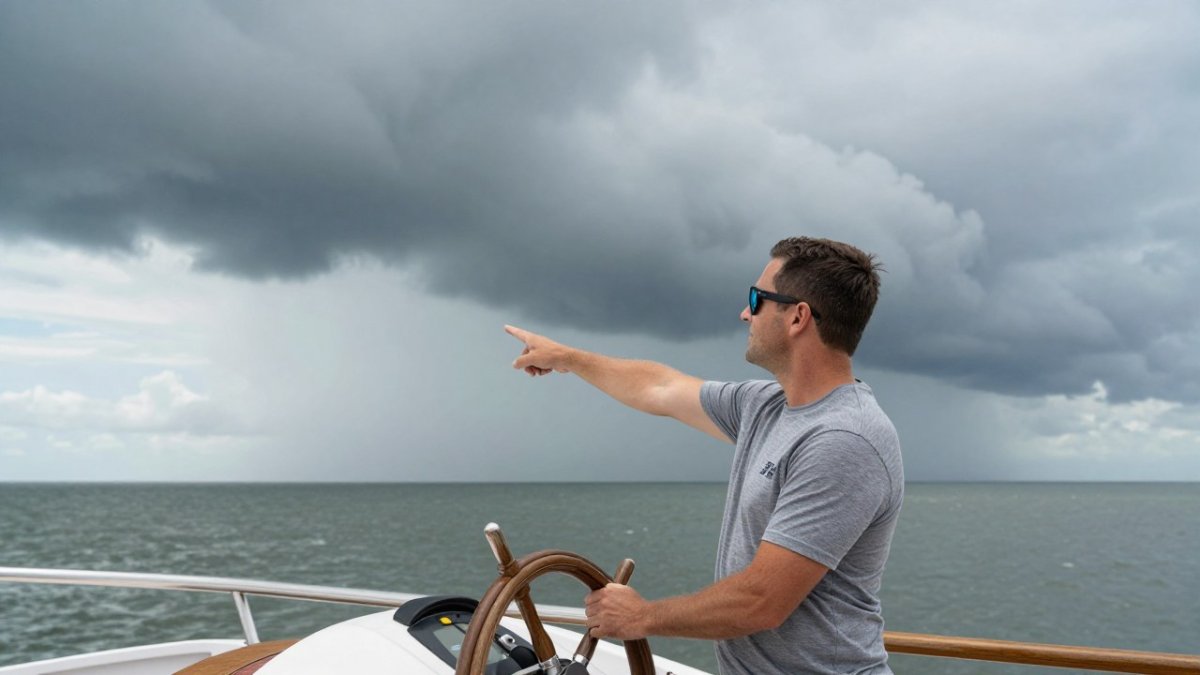
On a private charter, the captain makes the final call on whether it's safe to leave the dock, a licensed captain has a legal and professional obligation not to operate in unsafe conditions. The decision usually comes down to three things:
Wind and sea state. Small-craft advisories and choppy bay conditions are the most common triggers. A captain may cancel or shorten a trip even on a sunny day if the wind makes the anchorage uncomfortable or unsafe.
Storms and lightning. Summer afternoon thunderstorms are a regular pattern in this region. A captain will typically wait out a passing cell if the schedule allows, but will not run through an active lightning threat.
Visibility and equipment. Fog or a mechanical issue can also force a cancellation or a vessel swap.
Ask how and when the operator communicates a weather decision, call, text, or email, and how far in advance. A good operator contacts you the evening before or the morning of the trip, not at the dock.
What 'weather cancellation' actually means for your money
The phrase sounds simple, but the outcome depends on the operator's policy. Know which of three common models applies to your booking:
Free reschedule. The most guest-friendly model. If the captain cancels for weather, your payment is held as a credit toward a future date, often with no expiration or a long window. This is common in the private charter industry.
Refund minus a processing fee. Some operators refund the deposit but retain a small administrative fee. Ask what that fee is in dollars before you book.
Refund of deposit only, balance forfeited. Less common but worth checking. If the policy is unclear, ask for it in writing.
Separately, ask what happens if you cancel, a sick child, a changed flight, a schedule conflict. Guest-initiated cancellations are usually treated differently, and the deposit is often non-refundable inside a window (commonly 48-72 hours before departure). Get the specific window in writing.
Watch Out A verbal 'we'll work with you' is not a policy. Before you pay a deposit, ask the operator to send the cancellation and weather terms in writing, even a screenshot of the booking confirmation is enough, so there is no dispute later.
How to protect your trip and your money
A few practical steps reduce the chance weather ruins more than your afternoon:
Build in a buffer day. If your schedule allows, avoid booking a charter for the same day as a flight home or a non-refundable event. A weather reschedule is far less painful when you have another day to fall back on.
Book earlier in the day when possible. Afternoon storms are a common pattern in summer. A morning departure is statistically less likely to be interrupted, and it leaves the afternoon free if the captain needs to shift the trip.
Ask about a vessel swap. If your reserved boat has a mechanical issue, some operators will move you to a comparable vessel rather than cancel. Ask whether that is an option and whether the rate changes.
Questions to ask before you book
What specifically counts as a weather cancellation, and who makes that call?
If the captain cancels for weather, do I get a refund, a credit, or a reschedule, and does the credit expire?
What is the guest-initiated cancellation window, and what is forfeited inside it?
Understand your specific terms before you pay, so a stormy forecast becomes an inconvenience rather than a loss.
Preparing for Your Charter: What to Bring and Safety Requirements
On the day of your charter, bring the right items and follow safety rules, preparation keeps everyone safe and makes the experience better.
What to bring:
Sunscreen (reef-safe if you're snorkeling)
Towels
Change of clothes
Safety requirements:
Life jackets mandatory for all passengers
Children must wear jackets at all times
Listen to captain's safety briefing
The captain conducts a safety briefing before departure. Pay attention, it covers emergency procedures that could matter.
Common Booking Mistakes to Avoid
First-time bookers make predictable mistakes. Knowing what to avoid saves money, frustration, and disappointment.
Mistake 1: Not verifying captain credentials. You assume anyone operating a charter boat is licensed.
Mistake 2: Booking without understanding what's included. Amenities aren't standard.
Mistake 7: Not discussing special requests early. Want music, decorations, or a specific itinerary?
Frequently Asked Questions
What should I look for when booking a private captain for a Crab Island charter?
When booking a private captain, verify US Coast Guard certification, check experience specifically with Crab Island navigation and shallow water conditions, confirm marine insurance coverage, and review customer references. Ask about the captain's knowledge of water activities, safety protocols, and ability to customize your itinerary. A qualified captain will be transparent about vessel specifications, passenger capacity limits, and any restrictions based on weather or sea conditions.
How far in advance should I book a private boat charter for Crab Island?
Booking 2-4 weeks in advance is ideal for private Crab Island charters, especially during peak season. This timeframe allows you to secure your preferred dates, ensures the licensed captain and vessel you want are available, and gives you time to communicate special requests or customizations. For large groups or special occasions like bachelorette parties or milestone celebrations, booking 4-6 weeks ahead is recommended to guarantee availability and better planning.
Are there hidden costs I should know about when booking a private Crab Island captain?
Always ask your charter operator for a complete breakdown of costs upfront. Common items to clarify include gratuity for the captain, fuel surcharges, dock fees, life jacket rentals, water activity equipment, and any amenities like food or beverages. Some operators bundle these into their hourly charter rate while others charge separately. Request a written quote detailing all fees so there are no surprises on your booking day.
What happens to my reservation if weather cancels my private charter?
Most reputable private charter operators offer flexible rescheduling options if weather forces a cancellation. Typical policies allow you to reschedule for another date at no additional cost or receive a full refund of your deposit. Confirm the specific cancellation and weather policy before booking, as policies vary by operator. US Coast Guard regulations prioritize passenger safety, so captains may cancel or modify itineraries based on sea conditions, wind, or other hazards.
Booking a private Crab Island captain doesn't have to be complicated. You need the right information and a reputable operator. Nauti Pleasure Yacht Charters specializes in exactly this: matching your group with the right vessel, captain, and itinerary. Our U.S. Coast Guard certified captains handle the details so you focus on enjoying your day on the water. Get started with Nauti Pleasure Yacht Charters and turn your Crab Island vision into reality.
BOOK NOW
Add destincharteryachts.com as a preferred source on Google →

Comments